
Automotive data intelligence
Build a catalog
your customers
can rely on.
AI-powered validation of automotive cross-references and vehicle applicability. Find incorrect relationships, uncover missing coverage, and focus your experts where they matter most.
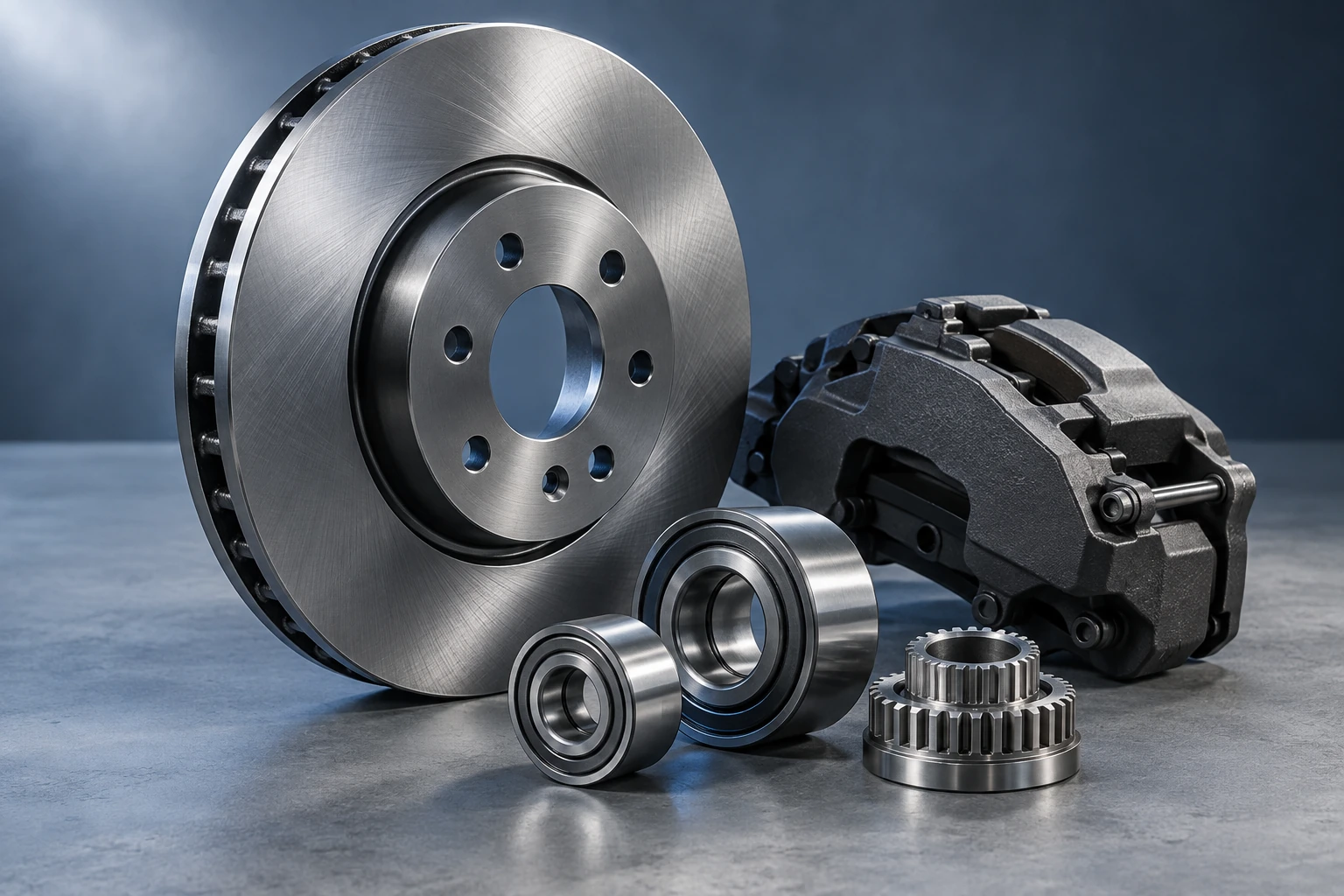
Every part has a place.
We help validate the relationships that connect them.
Built for the automotive aftermarket
Parts manufacturers
Distributors & wholesalers
Catalog & data teams
Better data.
Stronger business decisions.
01 / QUALITY
Protect catalog quality.
Identify incorrect relationships before they create wrong matches, rework and customer frustration.
02 / COVERAGE
Uncover missing links.
Find cross-references and application candidates that may be absent from your existing catalog.
03 / EFFICIENCY
Focus expert review.
Use confidence scores to prioritize uncertain cases and make large-scale validation more manageable.
Two applications. One intelligence engine.
Make your next
data decision a better one.
Obsidian Labs learns from expert-validated automotive relationships to assess the links between parts — and between parts and vehicles.
Cross Intelligence
01 / PART TO PART
Know which parts
belong together.
Validate cross-references using part attributes, technical specifications and existing relationships, beyond a simple part-number match.
Relationship validation
Illustrative example
Source
Part A
Cross-reference
Part B
Relationship assessment
Valid relationship
Example only. No customer data is shown.
- Validate existing cross-references
- Detect incorrect and missing links
- Prioritize expert review with confidence scores
Applicability Intelligence
02 / PART TO VEHICLE
Understand where
each part fits.
Evaluate vehicle applications using part data and vehicle context, including make, model, engine and configuration.
Applicability validation
Illustrative example
Source
Part A
Application
Vehicle A
Relationship assessment
Application validated
Example only. No customer data is shown.
- Validate existing vehicle applications
- Identify incorrect links and additional candidates
- Prioritize expert review with confidence scores
Measured on production data
Confidence backed
by validation.
98.7%
Precision at the reported
operating point*
72%
Automated coverage at
that operating point*
100K
Relationships
processed
*Company-reported validation results from evaluated production data. Precision and coverage should be considered together. Performance varies with the dataset, available attributes and confidence threshold.

Built around your data responsibility
Your role is different.
The need for reliable data isn’t.
We focus on the relationships your business depends on, whether you create product data, combine supplier catalogs or manage validation at scale.
Manufacturers & suppliers
Review cross-references and vehicle applications before catalog updates. Identify inconsistencies and gaps in product coverage.
Distributors & wholesalers
Assess relationships across supplier catalogs and prioritize conflicting or incomplete links for your data team.
Catalog & data operators
Add confidence-based validation to high-volume workflows while keeping experts involved in uncertain cases.
A practical starting point
Start with your data.
Decide with evidence.
A focused evaluation starts with a clear use case, a defined dataset and success criteria that reflect your business priorities.
01 / DEFINE
Choose the challenge.
Identify the relationship type, part categories and data quality questions that matter most to your team.
A focused use case and evaluation scope.
02 / EVALUATE
Assess the relationships.
Agree the dataset and validation criteria, then examine the engine’s output against the available reference data.
A shared basis for measuring performance.
03 / REVIEW
Plan the next step.
Review precision, coverage and the cases that need human judgment before defining an ongoing delivery approach.
Evidence to inform an implementation decision.
Before we talk data
Practical questions.
Clear answers.
Start with what your team needs to validate. We’ll help define the right conversation from there.
Does Obsidian Labs replace our catalog?
No. Our focus is the validation of relationships within your data. A catalog stores and organizes information; Obsidian Labs helps assess which part and vehicle links are correct, uncertain or potentially missing.
What data is relevant to an evaluation?
Relevant inputs include existing cross-references or vehicle applications, part attributes, technical specifications and vehicle context. The exact dataset depends on the use case and should be defined during scoping.
How does our team stay involved?
Human expertise provides the reference knowledge and remains important for uncertain or complex cases. Confidence scores help your specialists prioritize review rather than treat every relationship in the same way.
Will our data achieve the same performance?
Results depend on the dataset, available attributes and confidence threshold. The reported 98.7% precision at 72% automated coverage describes the evaluated data. A focused evaluation is the appropriate basis for assessing performance on your catalog.
How is the service priced?
The current model is usage-based, linked to validated relationships. The commercial scope depends on your use case and data volume. Contact us to discuss an evaluation and a proposal.
The Obsidian Labs blog
A clearer view of automotive data.
-

Why Wrong Auto Parts Cost the Aftermarket Billions — and How AI Cross‑Referencing Solves It
In the fast‑moving world of automotive aftermarket parts, speed and accuracy aren’t luxuries — they’re survival tools. Yet, every day, distributors and workshops around the…
-

The Future of the €500B Aftermarket: Why Cross‑Referencing Is the Key to Growth
The global automotive aftermarket is massive — and it’s only getting bigger. Valued at €502 billion in 2025, it’s projected to reach €756 billion by…
-

From Chaos to Clarity: How AI Is Transforming Automotive Parts Catalogs
The automotive aftermarket is one of the most dynamic industries in the world — and one of the most complex. Behind every repair shop and…
Let’s talk about your catalog
Where could better
data make the
biggest difference?
Tell us what your team is trying to validate. We’ll discuss the use case, available data and a practical evaluation scope.
Start the conversation with:
- Your cross-reference or applicability challenge
- The part categories and data volume
- What a useful result would look like